|
Patient instructions
Before your procedure
Please be prepared to tell us the following information
to make sure your procedure goes as smoothly and safely as possible.
Are you taking any medication?
It is important for us to evaluate all of the medications
you are taking to make sure the medications we give you will safely
interact with them.
If you are taking blood-thinning medications such as aspirin,
ibuprofen, coumadin, heparin, or lovenox, we need to know when you
last took them, as these medications can increase your risk of bleeding.
What’s your medical and surgical history?
Knowing your medical and surgical history helps us to better
understand your medical background and provides an overall picture
of your health care needs.
Do you have a pacemaker/defibrillator?
Before using some of our equipment, it is important for
us to know if you have a pacemaker or defibrillator s o we can prevent
our equipment from interfering with them.
Any allergies to medication or latex?
If you are allergic to certain medications or latex, please
let us know so you are not exposed to them.
Do you have a safe discharge plan?
Please tell us who will sign your discharge paper, drive
you home, and stay with you for the remainder of the day. It is
important that a responsible adult is with you during this time.
The day of your procedure
Where to go
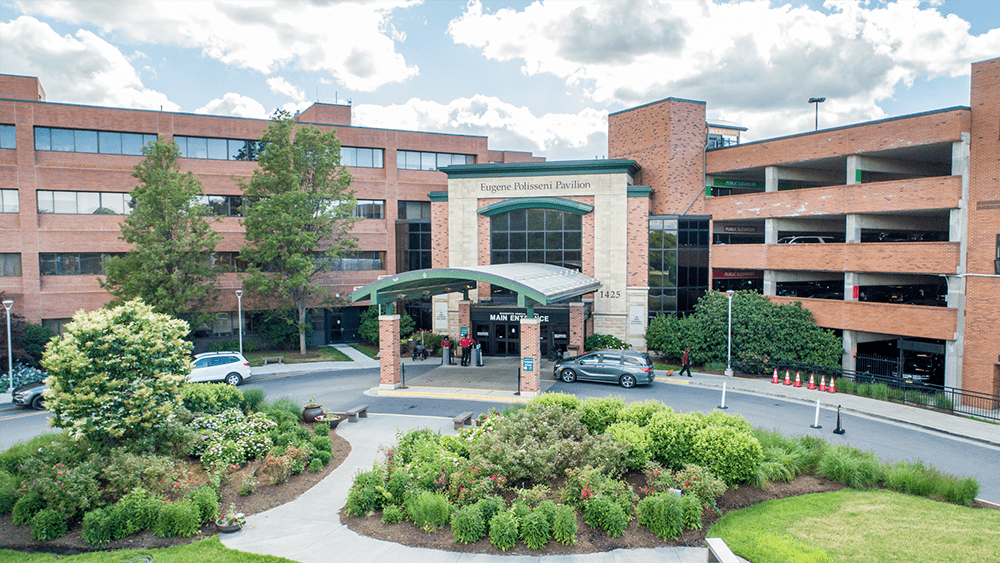
When you arrive on the Unity Park Ridge Campus, please
park in the main entrance parking lot (A) and enter the hospital through
the main entrance. Proceed to the visitor elevators and take them
to the third floor. Turn right off of the elevator and follow the
signs to the Endoscopy/Medical Procedure Center.
What to bring
Please bring your insurance information and social security number
with you on the day of your procedure. If your insurance requires
a hospital co-payment, it should be paid at the time of service.
After your procedure
You must have a responsible adult with you when you are
discharged. This person needs to hear your discharge instructions,
sign them, and drive you home. A taxi is not an acceptable ride
unless you have a responsible adult with you. For your safety, you
must have someone stay with you for the remainder of the day.
| Answers
to commonly asked questions |
| Q: |
How long is the procedure
and recovery? |
| A: |
Most procedures last between 15 and 45 minutes. Some may
take less time and others may take longer. Recovery time is
approximately one hour. During your recovery we monitor your
blood pressure, heart rate, and oxygen level to make sure
they return to pre-procedure levels. Before you are discharged
we make sure you feel comfortable and are ready to go home.
|
| Q: |
Will I be “put to
sleep?” |
| A: |
The medication that you are given for the test will help
to make you comfortable. It is a combination of a narcotic
(medication for pain) and a sedative (medication to relax).
You will most likely be very relaxed or, possibly, sleeping.
If you are uncomfortable, please let us know.
|
| Q: |
How will I feel later?
|
| A: |
People have different tolerance levels to the medication.
Because the medication we use during the procedure stays in
your system for a few hours, you are instructed not to drive,
drink alcohol, work, sign papers or contracts, or be alone
for the rest of the day. We encourage you to take it easy
and relax.
|
| Q: |
Will I get my test results
the same day? |
| A: |
Yes. Either the nurse or physician will go over your test
results, discharge instructions, and physician recommendations
with you before you go home.
|
| Q: |
Why do some of your questions
seem repetitive? |
| A: |
Our goal is to ensure that our patients have a safe and comfortable
procedure. Sometimes patients are nervous or anxious before
the procedure and may forget to inform us of certain information.
Asking questions repeatedly helps insure your safety.
|
| Q: |
In the waiting room, why
are other patients' names called before mine when I was here
first? |
| A: |
There are several physicians performing procedures in different
rooms in our Unit. Each physician works at a different pace
and some procedures may take longer than others. We will call
your name as soon as your physician is available. Thank you
for your patience.
|
| Q: |
How are the scopes cleaned?
|
| A: |
All of our scopes are sterilized immediately after each use.
|
Your safety and satisfaction are our
#1 priority.
- Please feel free to ask any questions that you may have. We
welcome your questions and feedback and want you to be comfortable
while you are here.
- Please provide accurate and thorough information when you complete
your medical history form including your surgical history and
known allergies. This information helps us deliver quality, safe
care to you.
- Please remember to tell us all of the current medications you
are taking when we ask. This includes medication prescribed by
your physician, and medications you take on your own, including
vitamins and supplements.
- Make sure the nurses check your name and birth date in the
pre-procedure room and the procedure room.
- After your procedure you may feel dizzy or lightheaded when
you stand as a result of the medication. Please let us know if
you need assistance to reduce your risk of falling.
- Ask the nurses or physicians to review your results with you
again if you don’t understand or remember them the first
time.
- Before you leave, please make sure you and your driver understand
the discharge instructions. Know how to reach your physician,
if needed.

|